.png)
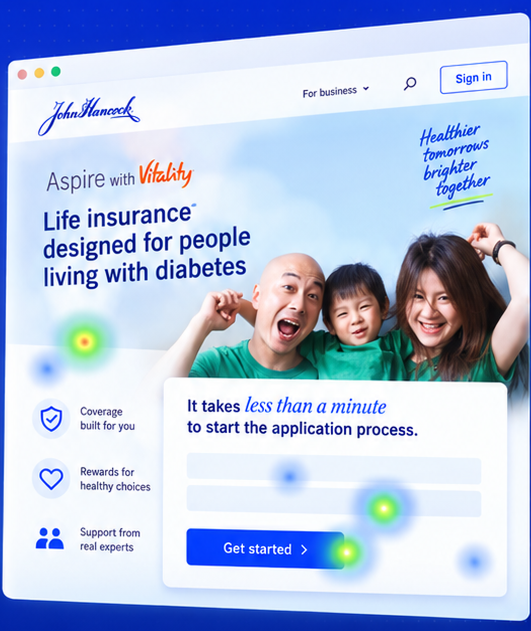
This work began while Circle & Square CEO Neeta Goplani was leading the John Hancock team, during the launch planning for its first life insurance offering designed for people living with diabetes.
It was the middle of COVID. The campaign planning was already well underway, and there were only weeks left to set the experience on the right path.
.png)
We started by mapping the experience end to end — every page, choice, handoff and place the journey created friction. Then we watched what people actually did. Session replays showed the same behavior again and again: regardless of where visitors came from, they moved past the marketing and looked for the information that would tell them whether this offer was really for someone like them.
But behavior only told us what they were doing.
Buyer research told us why. Many had already been declined for life insurance before. So a product designed specifically for people with diabetes didn’t immediately feel like an opportunity.
It felt almost too good to be true. They weren’t comparing benefits yet. They were trying to answer a more basic question:
“Will I actually be accepted?”
That was the insight that changed the work. The problem wasn’t persuasion. It was reassurance.
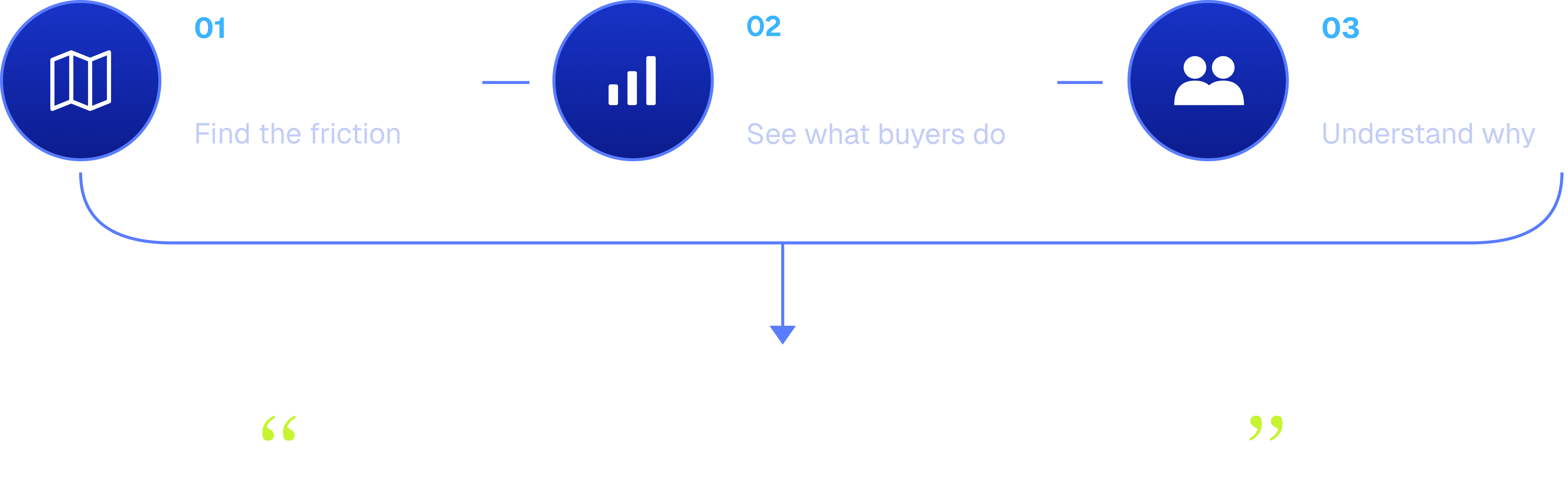
Once enough data came in, the real work was sorting signal from noise — which measures actually told us something about the buyer, and which of those could be tied together into a picture of a person.
That's what we built: a way to see the buyer. Then a way to keep seeing them.
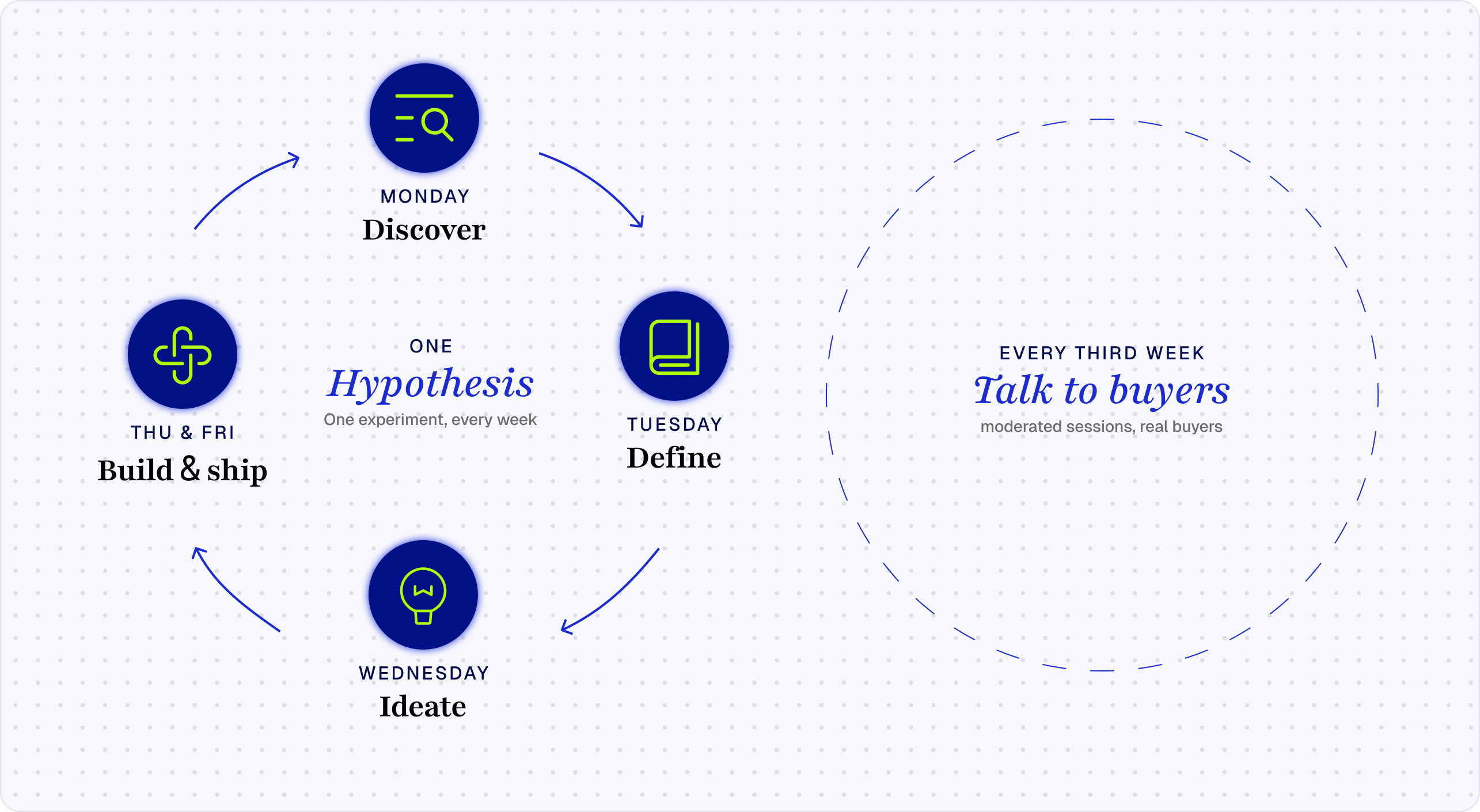
Most companies do this once. A research project, a deck, a persona that's out of date by the time it's designed. And all the people who could keep it alive — analytics, research, design, engineering — never sit in the same week.
We ran one hypothesis: these buyers won't engage until they know they won't be rejected. Every test was a different way of answering it. Different places to put the reassurance. Different words for it. Different points in the journey to say it.
When a test didn't move, we learned where the fear wasn't. When one did, we learned where it was. Either way we knew more than the week before.
By the end we could predict what would work before we shipped it.
Once the work was organized around the same buyer question, Analytics, research, design and the teams building the experience were no longer optimizing separate pieces in isolation.
They were working from the same picture of the buyer — and learning together week by week.
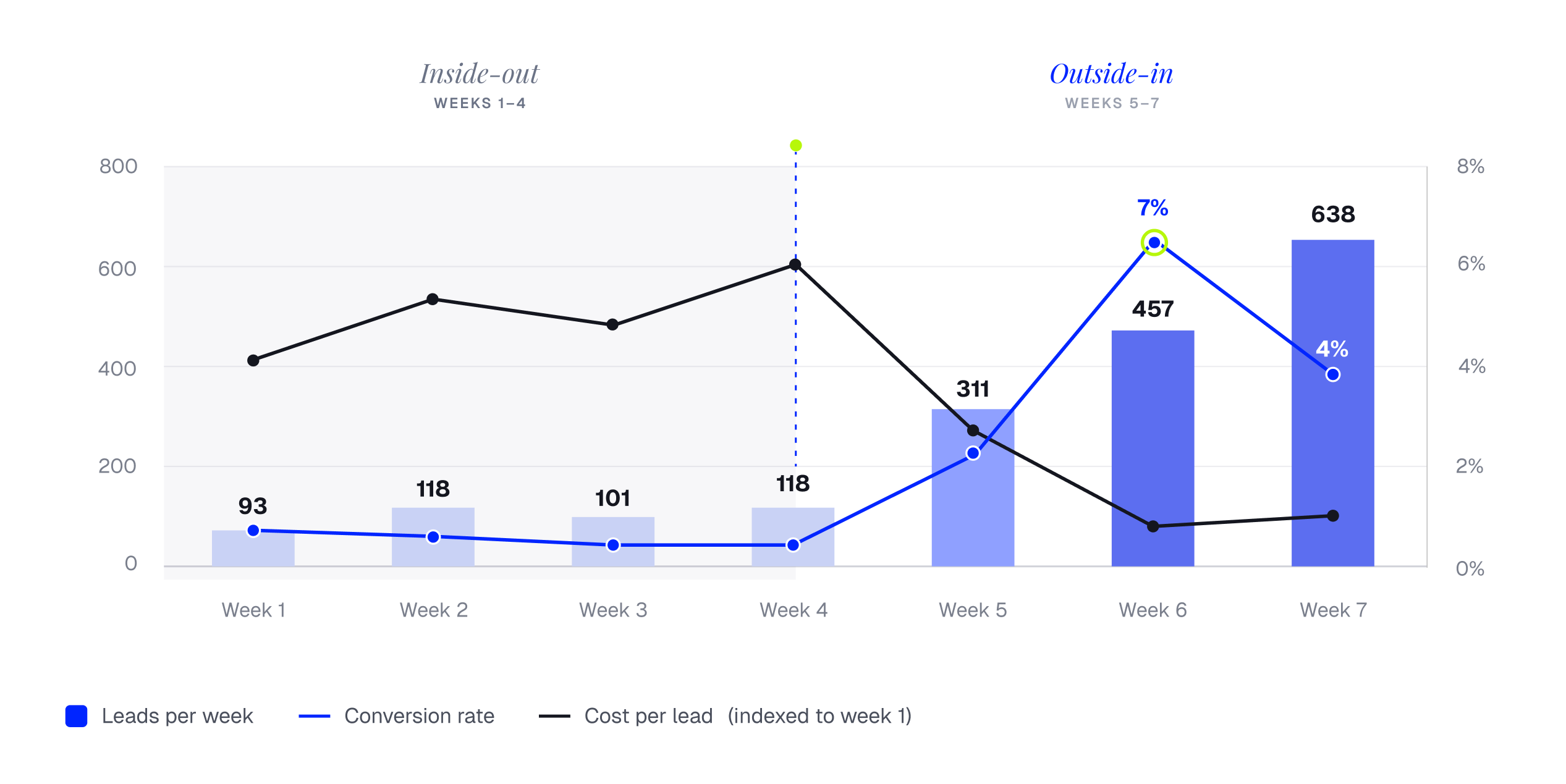
The lift didn't come from one better page. It came from connecting the buyer journey — and the teams shaping it.
Thank you Neeta for the passion that you put into your job! You go above and beyond with everything you do. What an awesome job you have done on the Aspire Leads UX optimizations!! Your outstanding consumer research and optimization recommendations resulted in great improvement in lead volumes!!


.svg)
Most teams look for growth by adding more. More media. More campaigns. More spend. Sometimes the bigger opportunity is finding what’s getting in the buyer’s way and fixing it.
.svg)