.png)
The GTM team had more data than ever — dashboards, reports, intent signals, engagement data and account activity coming from every direction.
But more data wasn’t creating more clarity. It was creating noise.
The team was reacting to whatever looked important in the moment, without a shared way to know which signals actually mattered, why they mattered, or what to do next.
.svg)
To understand why the GTM motion wasn’t performing as expected, we pulled together the signals that actually mattered and looked at them from both directions. When we brought those signals together into one 360° view, the mismatch became clear.
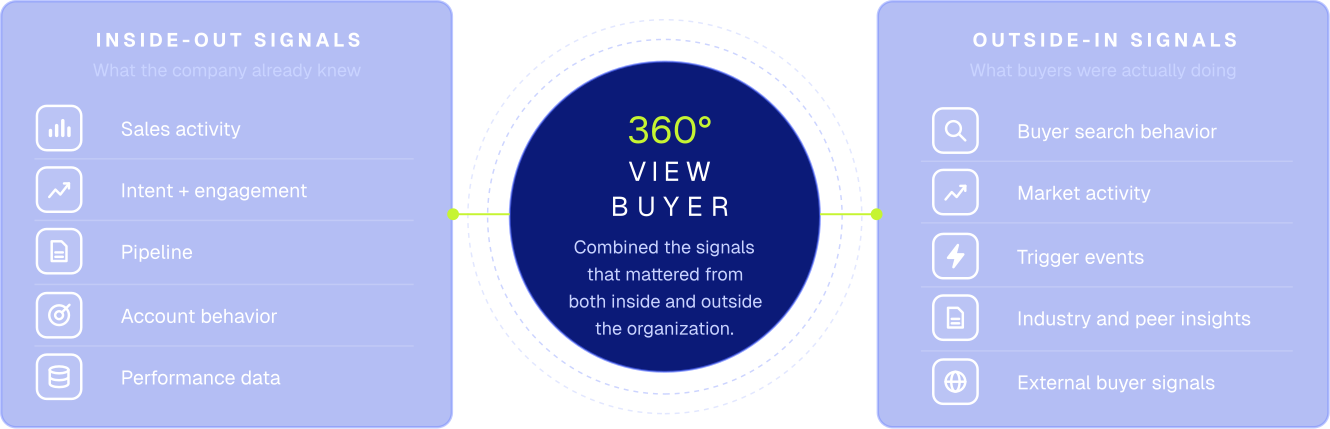
Portfolio-first, making the buyer's environment easier

Specific events that created immediate need

The research gave us the strategic reset, and the buyer conversations we uncovered became the spine of everything we built next.
But in an AI-mediated buying journey, buyer behavior is changing too quickly for research to stay static.
So we built a Buyer Intelligence System that continuously follows those conversations — almost like a radar — and helps the GTM team decide where to focus, what to create and where to act.
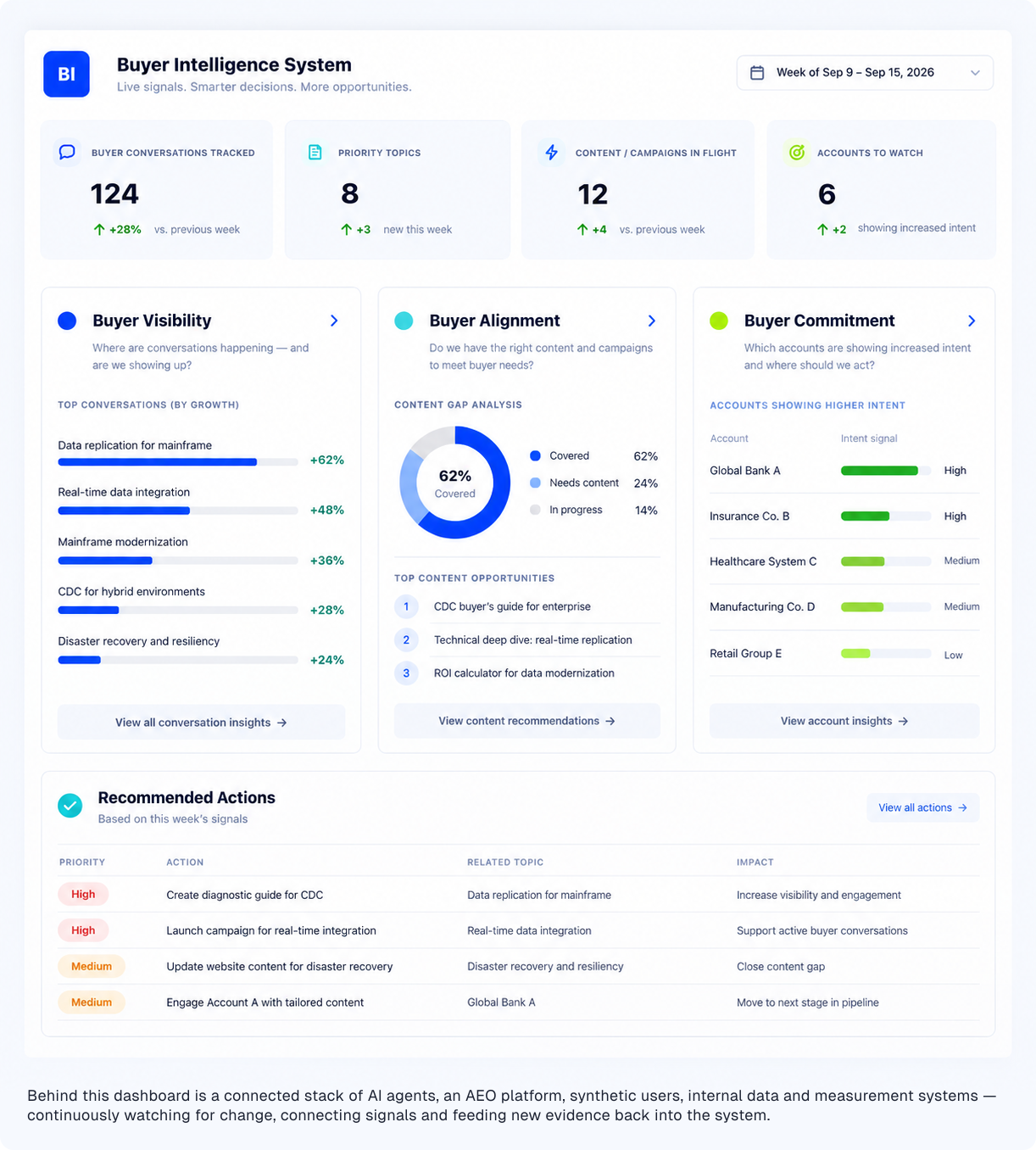
Buyer Visibility starts with the conversations uncovered in our original research. Our AEO platform tracks where those conversations are happening, which ones are gaining momentum and where the brand is — or isn’t — showing up.
When a conversation starts heating up, Buyer Alignment asks: Do we have the right content, message or campaign for that buyer right now? Synthetic users help us pressure-test what to create, for whom and how it should show up.
Those same signals then connect back to open pipeline through Buyer Commitment, helping the team identify which accounts may be more relevant now — and where there may be an opportunity to act.
Each week, new buyer behavior becomes new evidence — helping the team refine where to focus, what to create and where to act.
We created a guide that breaks down how to think about building your own Buyer Intelligence System.
The biggest change wasn’t the dashboard. It was how the team started thinking.
Instead of beginning with the portfolio, the campaign calendar or what the organization wanted to say, the team could start with the conversations buyers were already having — and respond to what was happening in the market now.
That shift changed how the team approached content, campaigns, pipeline and measurement.
And the need for this kind of reset is showing up everywhere.
It moves the team from an inside-out model — starting with products, campaigns and internal priorities — to an outside-in one that starts with where buyers are, what they are talking about and what is changing in their world.
Content meets those conversations. Campaigns respond to buyer momentum. Pipeline gets more context. And measurement tells the team what is working so the system can keep adapting.
.svg)
Most teams aren't short of data. They're short of a shared view of what matters — and a way to learn from what they do next.
.svg)